Interview - Brittany Straitton
An Interview with Brittany Straitton: Building a Leadership Brand Through Consistency
Hua Yu, Kelsey Deutschmann — March 26, 2026
In this conversation, Brittany reflects on the moments that shaped her leadership, from making bold recommendations early in her career to navigating disruption and uncertainty at scale. Her perspective offers an honest look at what it takes to grow and lead in a fast-paced industry, building “multiple careers” within a single organization, and why long-term success depends as much on how you show up as what you deliver.
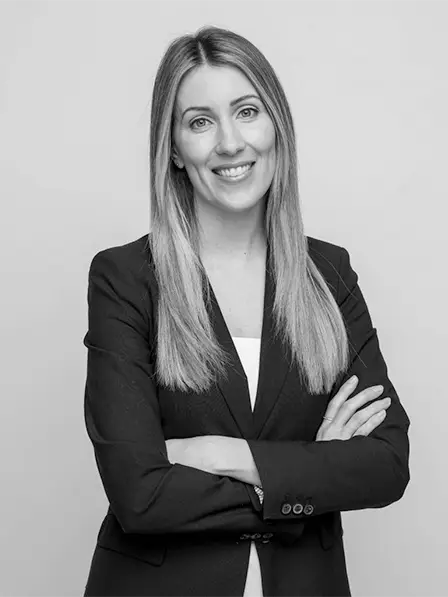 How did you get into retail, and what has kept you at Canadian Tire for so long?
I honestly fell into it. Growing up, I was always strong at languages and math, and people kept telling me I would be good in business, so I decided to try it and pursued a business degree in a program that included a co-op placement. I happened to land at Canadian Tire and during that first term, I fell in love with retail.
What really drew me in was how tangible it is. You can take an idea and see it all the way through to something real that customers interact with every day. You can walk into a store and understand the impact of your work in a very direct way. Even my kids know what I do because they can see it. That connection from concept to reality is what makes retail so exciting.
What has kept me at Canadian Tire is a combination of culture and opportunity. It is a Canadian-owned company with a genuinely supportive culture. People want to help one another, and there is a strong sense of partnership across the organization. At the same time, the scale of the business has allowed me to grow in many different directions. I have worked in buying, marketing, strategy, and now operations, and each move has felt like a new chapter rather than a repeat of the same role.
I am someone who is always looking to grow, and this environment has continued to challenge and stretch me. Even though I’ve stayed with one organization, I feel like I have built multiple careers along the way.
Early in your career, you made a bold recommendation to move an entire category to private label and Canadian-made. How did that decision come together, and what was it like working with senior leaders at that stage?
At the time, the data was telling us something important: customers who buy paint at Canadian Tire are incredibly loyal. Once they enter that category, they keep coming back, so we knew paint was more than a product category, it was a way to bring people into our loyalty ecosystem.
But when you look at the landscape, you quickly realize you cannot win on scale competing against major players. The only way to compete was to differentiate so we started asking ourselves how we could show up differently in ways that are meaningful to our customers.
We had a smaller supplier producing part of our stain line out of Quebec known for quality and flexibility, and I remember thinking, “What if we went all in?” We had strong branding, design, and the ability to build something compelling on our side, and if they could deliver a quality product, we could create something that was truly our own.
I was fortunate to have our leaders who were excited by the idea. When we decided to explore the private label route seriously, it was a big shift. It meant coordinating a lot of moving pieces and taking on a level of ownership that felt ambitious, especially early in my career, but I was ready to take it on. I told my leaders, you clear the path, and I can handle this. I knew there would be obstacles, but I also had a plan to get through them.
That experience reinforced for me that confidence does not come from title or tenure. It comes from being deeply prepared, understanding the problem you are trying to solve, and being willing to take ownership. When leaders see that level of clarity and commitment, it builds trust very quickly.
How do you think about personal brand, and how did that experience help shape yours?
I view personal brand as what people say about you when you are not in the room. It’s the impression you leave with others, especially in moments where they don’t have a lot of exposure to you.
I spend a lot of time thinking about how many cycles I have with different people. If I am only in front of someone once a year, I am very intentional about how I show up in that moment. That means being prepared, clear on my message, and thoughtful about the role I need to play.
When you are intentional about how you show up, people see the effort, they know what to expect from you, and over time, that consistency becomes your brand.
You now lead a team of 180 people. How do you balance strategy with operational execution at that scale?
Clarity is everything. I spend a lot of time being very clear on where we are going and what success looks like, then setting the objectives and operational measures we will be held against. Once that foundation is in place, my goal is to empower the team to deliver without needing me in the middle of every decision.
I practice what I call radical honesty. I share what I’m thinking, where the challenges are, and what trade-offs we’re navigating. Just as importantly, I create a lot of space for two-way communication. I want to hear from people at every level of the organization, because I have 180 incredibly intelligent people on my team. If I can unlock their collective thinking rather than relying on my own, the quality of our decisions improves significantly.
Balancing strategy and operations also requires being intentional with time. Operations will always pull you in if you let it, so I carve out protected space to step back, lift my head, and think strategically about where we are going. That might mean blocking time in my calendar or stepping away entirely, even if just to walk my dog and think. Those moments of distance are what allow me to move from reacting to shaping the future.
You have led through significant disruption and uncertainty. What did those moments teach you about leadership?
One of the biggest lessons for me was how quickly uncertainty can pull teams into silos. During COVID, retail was performing well, but everyone was in chase mode. People were just trying to keep up, and when that happens, every group starts operating inside their own world.
When I came back from maternity leave, the momentum we had in retail was starting to slow down, and I was coming into the situation with almost an outsider’s perspective. I could see the supply chain team, the forecasting team, the merchandising team, and the store support team all working separately, with very little coordination.
The first step was triage, focusing on the immediate crisis, bringing the right people into the same conversations, and making cross-team decisions instead of staying within functional lines.
But the bigger work was building something more consistent so we would not end up in the same situation again. We focused on creating a scorecard and identifying lead indicators to detect problems earlier. Even more importantly, we built in the expectation that those indicators needed to be discussed together, consistently, so that the organization stayed aligned.
In times of uncertainty, leaders need transparency, community, and the humility to rely on others. No single person has enough experience or capacity to solve complex problems alone. The objective is to make the best decision possible, learn quickly, and keep moving forward.
What principles guide your approach to sustainable leadership, especially over the long term?
For me, sustainable leadership starts with focusing on outcomes rather than time spent. I try to normalize flexibility and trust people to deliver, because that trust is what allows high performance to last over time.
I’m also very open about the fact that I don’t do everything perfectly. I drop the ball all the time, and I think that’s something we don’t talk about enough, especially as women. There’s already so much guilt, whether it’s about work or family, and adding more pressure doesn’t actually help anyone perform better.
What has helped me most is the amount of grace I give myself. I try to step back and look at the bigger picture. Am I, in general, showing up as a strong leader and a committed employee? Yes. Are there days where things fall apart because life happens? Also yes. And that is okay.
Sustainable leadership is about being consistent over time, not perfect in every moment. When you allow yourself that perspective, you free up the energy to focus on what really matters.
What is your philosophy on retail, and how do you see AI reshaping the future of the industry?
At its core, retail is a promise. When customers need something, we at Canadian Tire need to have it. I look outside on a snowy day and think about the people coming into our stores for windshield washer fluid or snow brushes. They expect those products to be there, so delivering on that promise is what builds trust.
One of Canadian Tire’s biggest advantages is how close we are to our customers. Most Canadians live within 15 minutes of one of our stores, and each store is owned by a dealer who lives in the community. They know their customers in a way you cannot replicate from the head office. On top of that, our loyalty program gives us a deep understanding of what Canadians need, and how those needs shift by region. My role is making sure we can deliver on that promise at scale, across the country, in real time.
AI and automation are going to play a huge role in how retail continues to evolve. I don’t see AI as replacing people, instead I see it as making people more effective. In operations, there is always far more work than people, so the opportunity is to take tasks off plates and allow teams to focus on higher-value thinking.
From forecasting to inventory management, AI can help us spot patterns that would be incredibly difficult for humans to see on their own. The challenge now is keeping pace with how quickly the technology is moving and reimagining our workflows to take advantage of it, while still keeping strong human judgment and accountability in place.
What advice would you give to women who aspire to senior leadership roles?
The biggest thing I would say is not to over-plan your life. It is very easy to try to line everything up perfectly, your career, your personal life, the timing of promotions, the timing of family. In reality, it rarely works that way. Life gets in the way and work gets in the way, and you have to allow yourself to keep moving forward on your ambition without waiting for the perfect moment.
I would also encourage women to be okay with dropping the ball sometimes. I get asked a lot how I do it all, and the honest answer is that I don’t. I drop the ball constantly. What matters is focusing on what is most important and giving yourself grace when everything cannot be done perfectly.
Confidence builds over time by continuing to take the next step, even when you are unsure, so trust your capabilities. There will be times when you walk into a situation and you do not have the experience, but that doesn’t mean you can’t do it. Preparation, clarity, and the willingness to own the hard parts will take you further than you think.


SEND US A MESSAGE

© 2023 Level5 Strategy.
All Rights Reserved.
SIGN UP TO RECEIVE UPDATES