Article
The Power of Leadership Brand: Credibility, Influence & Impact
Hua Yu, Kelsey Deutschmann — July 16, 2026
A strong leadership brand matters because it creates clarity and trust. It helps people understand what you stand for, what they can expect from you, and why they should follow your direction.
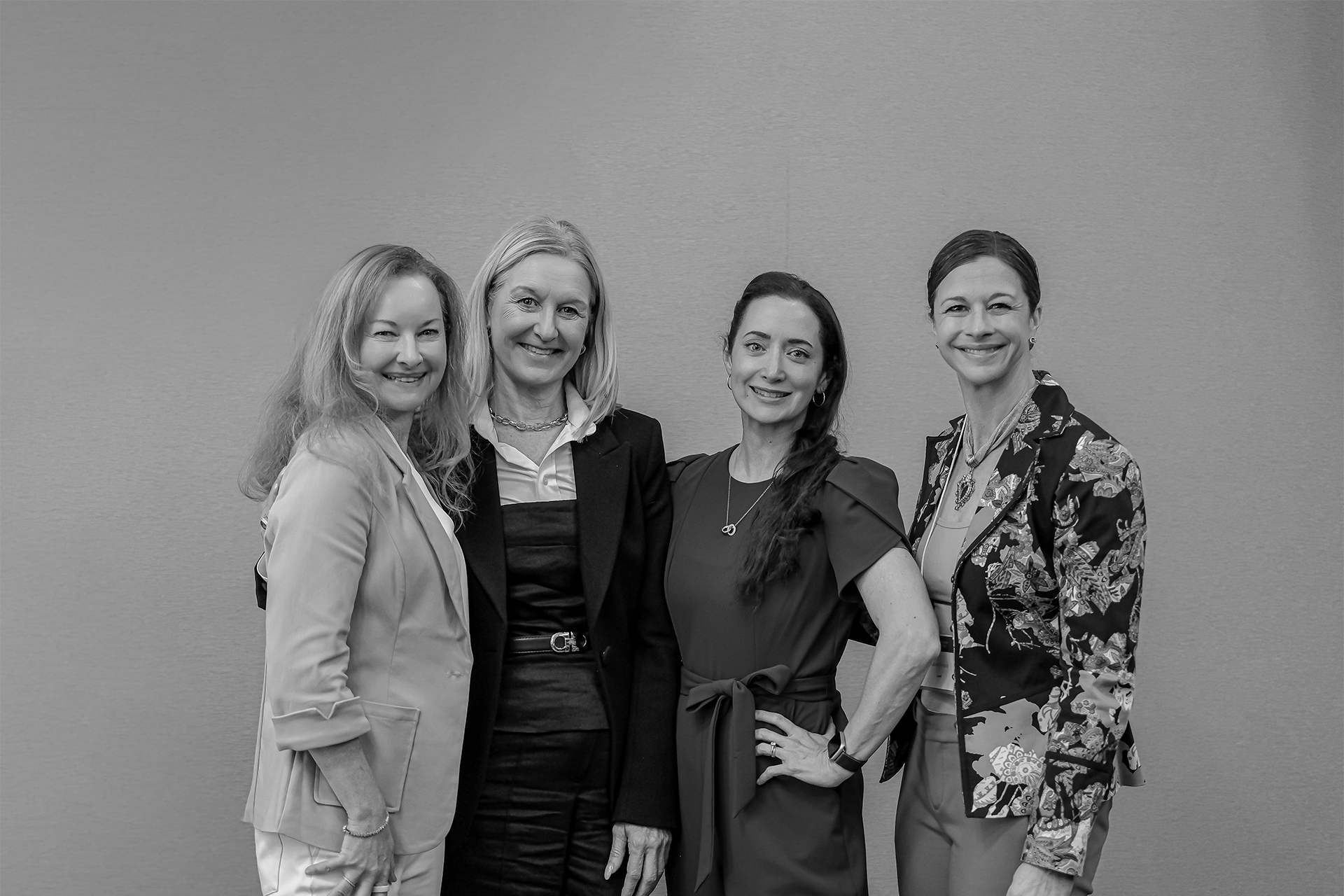
These ideas were at the heart of Level5’s recent Women in Strategy panel, The Power of Leadership Brand: Credibility, Influence & Impact. The conversation brought together three accomplished leaders, each offering a unique perspective on building a leadership brand that remains authentic, credible, and impactful through changing roles, career transitions, and periods of uncertainty.
Our panel featured:
- Nicole McNeill, President and Chief Administrative Officer of MPAC
- Natalie Bisset, Senior Vice President and Head of Corporate Development at Richardson Wealth
- Deborah Rosati, Founder and CEO of Women Get On Board
Despite their different experiences and career paths, three key themes emerged from the discussion, offering practical lessons for leaders seeking to build a leadership brand that inspires trust, strengthens influence, and creates lasting impact.
Theme 1: Know What You Want to Be Known For
Some accomplished leaders resist the idea of personal branding because it can feel performative or self-promotional. For leaders who have built their careers on results, the instinct is often to let the work speak for itself. While understandable, that instinct overlooks an important part of leadership.
Nicole McNeill shared that she initially resisted the idea for exactly that reason. For years, she associated branding with being “showy,” rather than as an opportunity to better understand how she wanted to lead. It wasn’t until she went through a structured branding exercise that her perspective changed.
Rather than creating a new identity, the process helped her articulate what was already there. Through reflection and feedback from trusted colleagues, she identified three defining pillars of her leadership. Those pillars became a guide for how she communicates, the opportunities she pursues, and where she chooses to invest her time.
Her experience emphasizes that a leadership brand is not about creating a new identity. It is about understanding what already defines your leadership and expressing it more intentionally and consistently. The foundation begins with three practical questions: Who are you? What do you do? What do you care enough about to champion?
Of the three questions, the third is often the most revealing. Most leaders can describe their role and responsibilities, but fewer can clearly articulate the ideas, values, or outcomes they want to be known for. That conviction gives a leadership brand its direction and shapes how a leader communicates, builds relationships, and contributes to the rooms they enter.
The result is greater confidence that comes from knowing what you stand for and understanding how that shows up in practice. With that clarity, leaders become more intentional about where they invest their time, the opportunities they pursue, and where they are best positioned to create value.
Theme 2: Allow Your Brand to Evolve with You
Leadership does not develop in a straight line. Each stage of our career brings new expectations, responsibilities, and opportunities for impact, so a leadership brand needs to be strong enough to remain recognizable, but flexible enough to evolve as the leader does.
Dr. Deborah Rosati describes her career as unfolding in three distinct chapters: preparing for your life’s work, doing your life’s work, and ultimately giving back through it. Her own journey is a great example of that evolution.
After years of serving on corporate boards, often as the only woman in the boardroom, Deborah was frequently asked the same question: “How did you get there?” Rather than answering it one conversation at a time, she recognized an opportunity to create a broader path for others. That insight led her to found Women Get On Board, an organization dedicated to helping more women prepare for and pursue corporate board leadership.
What began as a single event has since grown into a national organization that equips, connects, and champions women on their board journeys, while advancing greater gender diversity in boardrooms across Canada.
Deborah’s story also highlights an important lesson about leadership. As careers evolve, the qualities that establish credibility early in a career, such as technical expertise or functional excellence, may not be enough to lead at the next level. As responsibilities broaden, leaders are expected to demonstrate enterprise thinking, inspire and develop others, navigate greater complexity, and create conditions where people and organizations can thrive.
Rather than being reinvented with every new role, a leadership brand continues to evolve. Its foundation, your values, character, and purpose, remain consistent. What changes is how those qualities are demonstrated, the impact they create, and the ways they enable others to succeed.
Theme 3: Your Leadership Brand Is Built Through Everyday Actions
A brand is not defined only by what leaders accomplish, it is also shaped by how people experience working with them. Throughout the panel discussion, empathy emerged as one of the qualities that strengthen a leader’s brand and influence.
Empathy shapes every interaction with colleagues, clients, and teams. Leaders who take the time to understand what motivates people, where resistance is coming from, and how others experience it are usually able to achieve better results. In complex business environments, where outcomes depend on collaboration across functions, teams, and stakeholders, that understanding becomes a meaningful leadership advantage.
Natalie Bisset reflected on her early career in finance, including time in private equity, where empathy was not always the first quality associated with effective leadership. Rather than trying to lead like those around her, she leaned into what made her different. She took the time to understand what mattered most to people and built authentic relationships with her team. Over time, that approach became a defining part of her leadership brand. In environments often defined by results, she became known for building trust by demonstrating empathy.
Natalie’s story demonstrates that leadership brands are not built by a single defining moment but by thousands of everyday interactions. Every difficult conversation, moment of uncertainty, and high-pressure decision is an opportunity for others to see a leader’s values in action.
This is especially true during times of change. People do not expect leaders to have all the answers. What they do expect is honesty, empathy, clarity, and consistency. Leaders who communicate openly, acknowledge uncertainty, and stay true to their values earn trust, even when the path forward is unclear. Over time, it is these moments that shape a leader’s reputation and define the leadership brand that others experience.
So, When Do Leaders Start Building Their Brand?
All three panelists agree that the answer is to start now!
The first step is honest self-reflection. A leadership brand begins with understanding who you are, what you do well, and what you care enough about to champion. Feedback from trusted colleagues, mentors, coaches, or a 360-degree process can accelerate that clarity and help leaders see the gap between their intention and their impact.
Second, look for moments of mentorship, not only formal mentoring relationships. Some of the most meaningful guidance in a career can come from a single conversation, a timely challenge, or a leader who asks the right question at the right moment. Leaders should also recognize the value of learning from people they do not wish to emulate. Difficult relationships can clarify, with equal force, the kind of leader they do not want to become.
Third, don’t wait until you feel fully ready. Some panelists reflected that they came to the idea of leadership brand later than they would have liked. For some, the hesitation came from being closely identified with a corporate role or organization. For others, it came from discomfort with being more visible. Yet, once they began the work, they realized the process was less about creating something new and more about naming what had already been there.
Finally, for senior leaders, building a leadership brand is far more than a communications exercise. It is built through the decisions you make, the relationships you cultivate, and the experiences you create for others. Over time, those choices shape how people experience your leadership long before they ever describe it.


SEND US A MESSAGE

© 2023 Level5 Strategy.
All Rights Reserved.
SIGN UP TO RECEIVE UPDATES