
Interview - Wilma Chan
An Interview with Wilma Chan: Navigating Change with Curiosity and Purpose
Hua Yu, Kelsey Deutschmann — May 27, 2026
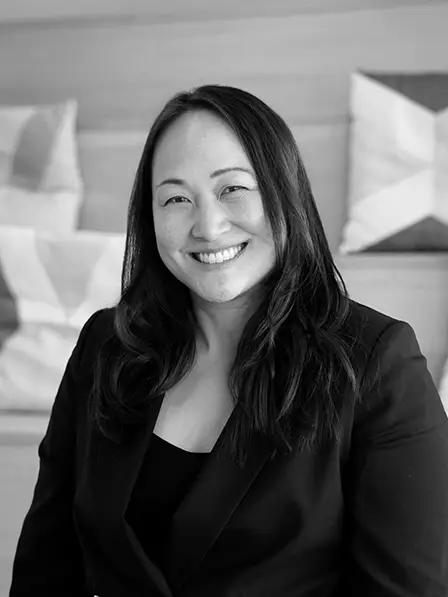 You initially planned to pursue a career in healthcare. What prompted you to explore a different path?
I originally thought I was going to pursue a career in science and move into a health profession. It felt like a very clear and predictable path, and in many ways, it was what I expected of myself at the time. During university, I decided to take a business course simply because I was curious and wanted to try something different. And that one decision ultimately reshaped the way I approached both problem-solving and the direction of my career.
What really stood out to me was how open-ended everything felt. In science, there is often a clear answer or a defined way to solve a problem. In business, I found that you could look at the same situation and approach it in completely different ways. That flexibility was incredibly refreshing, and it made me realize how much I enjoyed thinking through problems from multiple angles.
As I reflected on that experience, I realized my career did not have to follow a single, predefined path. What drew me to business and marketing was the opportunity to build a career that felt personal and flexible. I became excited by the idea that growth comes from continuously learning, exploring new experiences, and challenging yourself in different environments. That realization gave me the confidence to move away from what felt expected and pursue a path that felt much more aligned with who I am.
You’ve described curiosity as a defining part of who you are. How has that shaped the choices you’ve made throughout your career?
Curiosity has always been a part of me. It is something I can trace back to when I was very young, where I was constantly trying new things, pushing boundaries, and testing what I was capable of. Over time, it just became my mindset on how I approached things.
For me, curiosity is closely tied to the idea of not standing still. I have always been motivated by the opportunity to learn from different situations, whether that is through personal experiences, working with new teams, or stepping into unfamiliar roles. It has pushed me to ask questions, to understand the “why” behind decisions, and to look beyond what is immediately in front of me.
One of the most important things I have learned is that growth often comes from being in environments where you do not have all the answers. There is a level of discomfort in that, but I have come to see it as a positive signal. When I am in those situations, I know I am stretching myself, and that is where I tend to learn the most.
That perspective has guided many of my career decisions. Rather than seeking out roles where I felt completely comfortable, I have intentionally moved toward opportunities that challenged me. Curiosity has been the thread that connects those choices, helping me build new skills, gain different perspectives, and continue evolving in ways that feel meaningful.
You started your career at Spin Master in a very unstructured, entrepreneurial environment. What did that experience teach you early on?
Starting my career at Spin Master was a very eye-opening experience because it was completely different from what I expected coming out of university. I thought I would be stepping into an environment where there would be clear guidance, structured development, and a defined way of doing things. Instead, it was highly unstructured, fast-moving, and full of creative energy.
It often felt like there was no sandbox. You were expected to figure things out as you went, and that could feel both exciting and overwhelming, especially early in your career. At the same time, it pushed me to take ownership much sooner than I anticipated. I had to rely on what I had learned and apply it in a very practical way, even when the environment itself did not provide that structure.
What grounded me was going back to fundamentals. I leaned into the frameworks I had learned in school, whether that was thinking through strategy, understanding the market, or defining a clear value proposition. Bringing that level of rigour into a more chaotic environment helped me create my own sense of direction and build confidence in the decisions I was making.
Looking back, that experience taught me a lot about resilience and problem-solving. It showed me that even in ambiguity, you can create clarity for yourself. It also reinforced that impact is not just about the outcome, but about your ability to navigate the process and move things forward, even when the path is not clearly defined.
After your time at Spin Master, you made the move to Heinz. What did you learn there that has stayed with you?
Moving to Heinz was a very intentional decision for me because I knew I wanted to build a stronger foundation in strategy and marketing fundamentals. The environment was everything I had expected coming out of school. It was highly structured, very disciplined, and grounded in a clear way of thinking about business problems, so I consider it my mini-MBA.
What stood out immediately was the level of rigour. Every strategy started with facts and insights, and there was a strong emphasis on truly understanding the problem before proposing a solution. You were constantly presenting your thinking, and each level of the organization would challenge it in different ways. Those questions were not always easy, but they forced you to refine your ideas and build much stronger, more thoughtful strategies.
There was also a deep sense of alignment across the organization. Everyone understood the broader goals and how their work contributed to them, which created a very cohesive team environment. That clarity made it easier to focus on what mattered and ensured that efforts were moving in the same direction.
One of the biggest adjustments for me was the level of detail and polish expected in everything we did. At times, it could feel intense, but it taught me to communicate ideas clearly and precisely. Looking back, that experience strengthened my ability to think strategically and gave me a level of discipline that I continue to rely on in every role I have taken on since.
You’ve worked across very different environments. How did the definition of success change from Spin Master to Heinz, and how did that shape your approach?
My definition of success has evolved quite a bit across the different environments I have worked in, and a big part of that was understanding that success is not only personal, it is also defined by the organization you are in.
At Spin Master, success was very much about building and creating. It was an inventor-led model, so the goal was to develop ideas that could turn into real products and, ultimately, successful brands. There was a lot of ambiguity, and not every product was guaranteed to work, so success was tied to your ability to move quickly, test ideas, and figure out what had potential. It required a high level of ownership and a willingness to take risks, knowing that not everything would succeed.
At Heinz, success was defined very differently. It was grounded in structure, consistency, and performance against clear business targets. There were established brands, defined revenue and profit goals, and a strong emphasis on building strategies that were backed by data and insights. Success was not just about having a strong idea, but about ensuring that it aligned with broader business objectives and could stand up to rigorous scrutiny. There was also a clear expectation that teams were working together toward shared goals.
As I moved into other roles, I started to see success as the ability to quickly understand how it is defined within each environment and align with it. That meant adapting my approach, working closely with others, and ensuring that both the business and marketing strategies were moving forward together in a meaningful way.
You’ve spoken about building a career that meets your own requirements. What does that mean in practice, and how has it guided your decisions?
One of the most important shifts in my career was realizing that I needed to define it on my own terms. We spend a lot of time in our work thinking about how to define a company’s brand or strategy, but I found it just as important to step back and ask myself what I stood for and what I wanted from my career.
For me, that started with clarity around a few core values. Authenticity has always been important. I want to show up as myself and have a genuine connection to my work. Integrity is another key piece, having a clear sense of what I am willing to push on and where I draw the line. I have also found that I create the most value in situations where there is complexity or ambiguity, where I can step in and help bring clarity and direction.
Another important factor for me has been the type of environment I choose to be in. I am naturally drawn to roles where I feel challenged and where there is a sense of momentum. I look for opportunities where I have the space to understand a business problem deeply and the autonomy to help solve it. That sense of immersion and energy is what keeps me engaged.
As a result, I have intentionally moved across different industries and roles, even when it would have been easier to stay in one lane. For me, building a career has been about continuously learning, exploring new environments, and shaping a path that reflects what I value most.
You’ve had strong sponsorships throughout your career. What did you learn from that experience, and how did it shape your growth?
The most meaningful relationships in my career were not something I actively set out to find. They developed over time through the work I was doing and the relationships I was building within the organization.
I was fortunate to have a leader who not only guided me but also actively advocated for me. What made that relationship work was a combination of trust and clarity. I focused on doing strong work, supporting the people around me, and showing up consistently. That created a foundation where my sponsor had confidence in investing in me and putting my name forward for new opportunities.
One of the most important moments for me was being very clear about what I wanted. I knew I had a goal of reaching a senior leadership role, and I communicated that directly. That allowed us to work together in a much more intentional way and map out the actions I needed to get there.
What stayed with me most was how my sponsor thought about development more broadly. He used to say that succession planning should not be difficult if you continuously hire and develop strong and talented people. If you are consistently building talent, the next generation of leaders naturally emerges. That perspective shifted how I thought about growth, not just for myself, but for the teams I would eventually lead.
Looking back, sponsorship was not just about having someone advocate for me. It was about building a relationship grounded in trust, shared goals, and a belief in long term development.
What practices have helped you most in developing your own strategic thinking?
My approach to strategic thinking has been shaped over time, but there are a few core things that I come back to consistently. The first is always starting with facts and insights. It is very easy to jump to ideas or solutions, but I have learned that the strongest strategies are grounded in a deep understanding of what is actually happening. That means looking at the data, understanding the context, and being clear on the problem you are trying to solve.
The second is having a strong understanding of the business itself, particularly from a financial perspective. Early in my career, I spent a lot of time learning how to think about the P&L and how different decisions impact performance. That has stayed with me because it allows you to connect strategy directly to outcomes. You are not just proposing ideas, you are able to clearly articulate the value they will create and how they will contribute to the business.
The third piece, which I think is just as important, is being able to drive toward outcomes without holding too tightly to your own ideas. Strategy is rarely built in isolation. It evolves through collaboration, and often the best ideas are shaped by multiple perspectives. I have learned to focus less on ownership of a specific idea and more on the outcome we are trying to achieve.
When you bring those three elements together, you create a way of thinking that is both disciplined and flexible.
At Ontario Lottery and Gaming Corporation (OLG), you were balancing business growth with a strong focus on social responsibility. How did that shape your approach to building strategies?
My time at OLG really expanded the way I thought about marketing and strategy by introducing a level of responsibility that went beyond just driving growth. On the surface, it may seem straightforward, but when you look more closely, the customer landscape is much more complex.
Yes, we are speaking to adult players, but there are also groups that should not be engaging at all, such as children or individuals who may be at risk. That reality changes how you think about your role as a marketer. It is not just about attracting customers, but about being very intentional in how you communicate, where you show up, and the impact your work can have.
What stood out to me in that environment was the need to balance multiple priorities that do not always naturally align. On one hand, there are clear business objectives around growth. On the other, there is a strong mandate around social responsibility and risk mitigation. Success required bringing those perspectives together rather than treating them as separate conversations.
A big part of that came down to collaboration. We worked closely with internal stakeholders and regulatory bodies, ensuring they had a seat at the table early in the process. That allowed us to pressure test our strategies, understand different viewpoints, and build solutions that were both effective and responsible.
That experience reinforced that a strong strategy is not just about driving results. It is about understanding the broader impact of your decisions and ensuring that you are building something that is sustainable and aligned with the responsibility you carry.
Now, as CMO at IntouchCX, you’re leading in a B2B environment. How has your approach to strategy evolved in that shift?
Moving into a B2B environment and stepping into my role at IntouchCX was a significant shift in how I approached strategy. In B2C, you are often speaking to millions of consumers, and that comes with a level of scale and broad reach. In B2B, your audience is much more focused, and you often target a much smaller group of decision-makers.
That shift changes everything. It is no longer about mass communication, but about being highly precise and relevant. You need to deeply understand the buying journey, how decisions are made, and what specific challenges your audience is trying to solve. If your value proposition does not resonate with that individual, you are unlikely to move forward.
What became very important in this environment was immersion. It was not enough to just understand the product at a high level. You had to spend time with the business, understand how it operates, and really get close to the customer. That meant working closely with teams, listening carefully, and building a strong understanding of what matters most to the people you are trying to reach.
It also required a shift in how we approached strategy more broadly. We moved from broader, programmatic approaches to more targeted strategies, such as account-based marketing, where you are tailoring your efforts to very specific organizations and decision makers.
That experience reinforced for me that strong marketing is always grounded in understanding your audience, but the level of depth required in B2B is significantly higher. It is about precision, relevance, and building meaningful connections that can lead to long-term partnerships.
May is the Asian Heritage Month in Canada. What advice would you give to future leaders who may be navigating similar cultural expectations?
If I reflect on my journey, especially through the lens of Asian Heritage Month, one of the biggest pieces of advice I would share is to not be afraid to step forward and define your own path. Growing up, there was a strong emphasis on working hard, keeping your head down, and following a path that was already laid out. There is a sense of security in that, and it comes from a place of care, but it can also feel limiting.
For me, one of the most important decisions was choosing to step away from that predefined path and explore something different. It was not always easy, especially when I had to explain choices that were less familiar or less clearly understood. At the same time, it was incredibly rewarding because it allowed me to build a career that felt aligned with who I am.
I also think it is important to recognize that being different is a strength. As an Asian woman, there were moments where I felt the tendency to stay quiet or wait for the right time. Over time, I learned that having a voice and using it thoughtfully is critical. It does not mean being the loudest person in the room, but it does mean being present, building relationships, and finding the moments where you can contribute in a meaningful way.
Stepping forward can feel uncomfortable, but that is often where the greatest growth happens. If you stay grounded in your values and continue to push yourself, you can create opportunities not just for yourself, but for others who are navigating a similar path.

SEND US A MESSAGE

© 2023 Level5 Strategy.
All Rights Reserved.
SIGN UP TO RECEIVE UPDATES