
Article
How Generational Differences Are Affecting Donor Behaviour
Jordan Shapiro, Laura Richard — January 28, 2026
Every generation brings its own perspective to philanthropy, shaped by formative experiences, economic realities, and cultural context. While timeless principles such as trust and transparency remain universally important, Level5 Strategy’s recent research highlights that donors want to be engaged in varied ways depending on which age cohort they belong to. Cultivating lasting relationships requires more than a one-size-fits-all approach. The journey to true donor-centricity begins with an understanding of what resonates with each generation. By leveraging insights to develop donor engagement strategies that stick, the connection between what is being done and how individual preferences are being delivered on becomes tangible.
Why Do Donors Stop Giving?
There are meaningful differences in what drives giving intent and engagement across generations. When donors of all age groups were asked why they stopped giving, the number one reason was a change in their financial situation. Beyond this life circumstance, trust is a critical driver of donor behavior – our data shows that “not trusting how my donation was used” is the second largest reason why donors stop giving across nearly every generation. When donors feel uncertain about whether their contributions are making a real impact, their connection to the organization weakens, and even well-intentioned engagement strategies fail to stick. Beyond finances and a lack of trust, other deterrents of giving were slightly nuanced by generation, which are critical to be aware of:
We also asked donors about the last time they donated to a non-profit to see how any gaps in the donor experience shaped their desire to give.
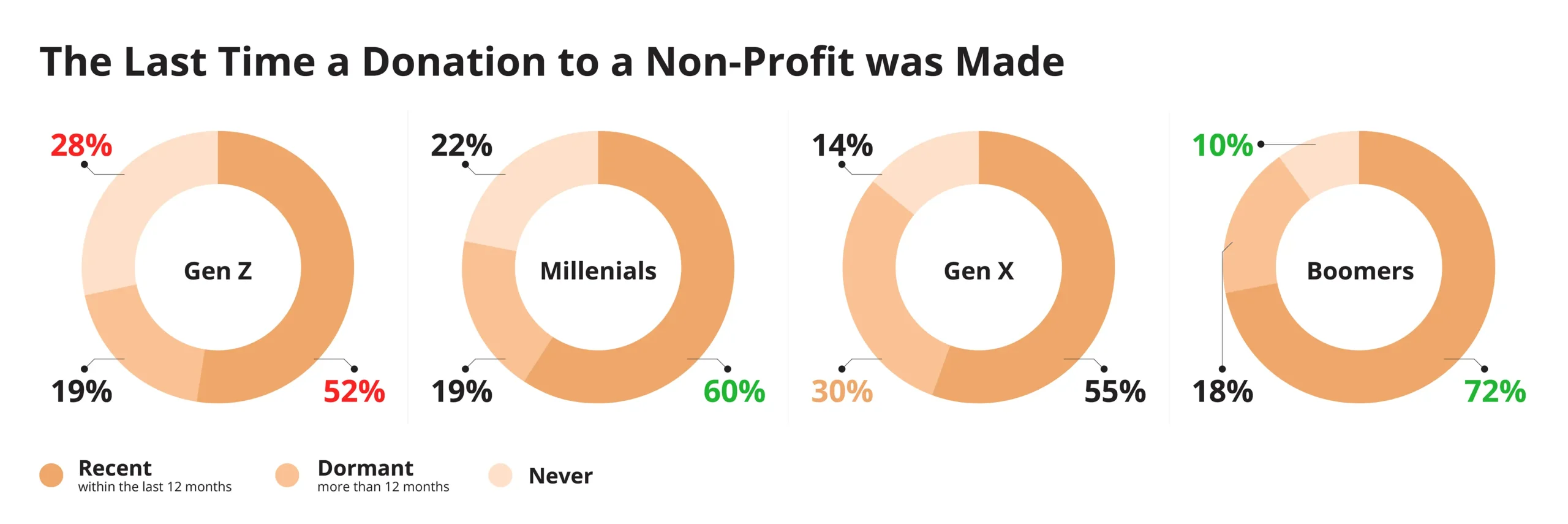
Donor behavior varies significantly by generation, with Gen Z and Millennials reporting notably higher rates of never donating compared to older generations. This can be attributed to their general life stage, with less financial freedom being new to their careers; their obligations are much different than older donors. The generation with the highest attrition is Gen X with 30% citing their dormancy from donating. In contrast, Boomers demonstrate the strongest recent donation activity and the lowest “never donated” rates, indicating greater stability over time.
How Rational and Emotional Drivers Influence Giving
Giving decisions are equally influenced by rational and emotional drivers, yet our research suggests that emotional drivers are often less understood and activated against in donor strategies. Based on the data collected from donors, we were able to capture both the rational and emotional drivers to explore how they manifest differently between generations.
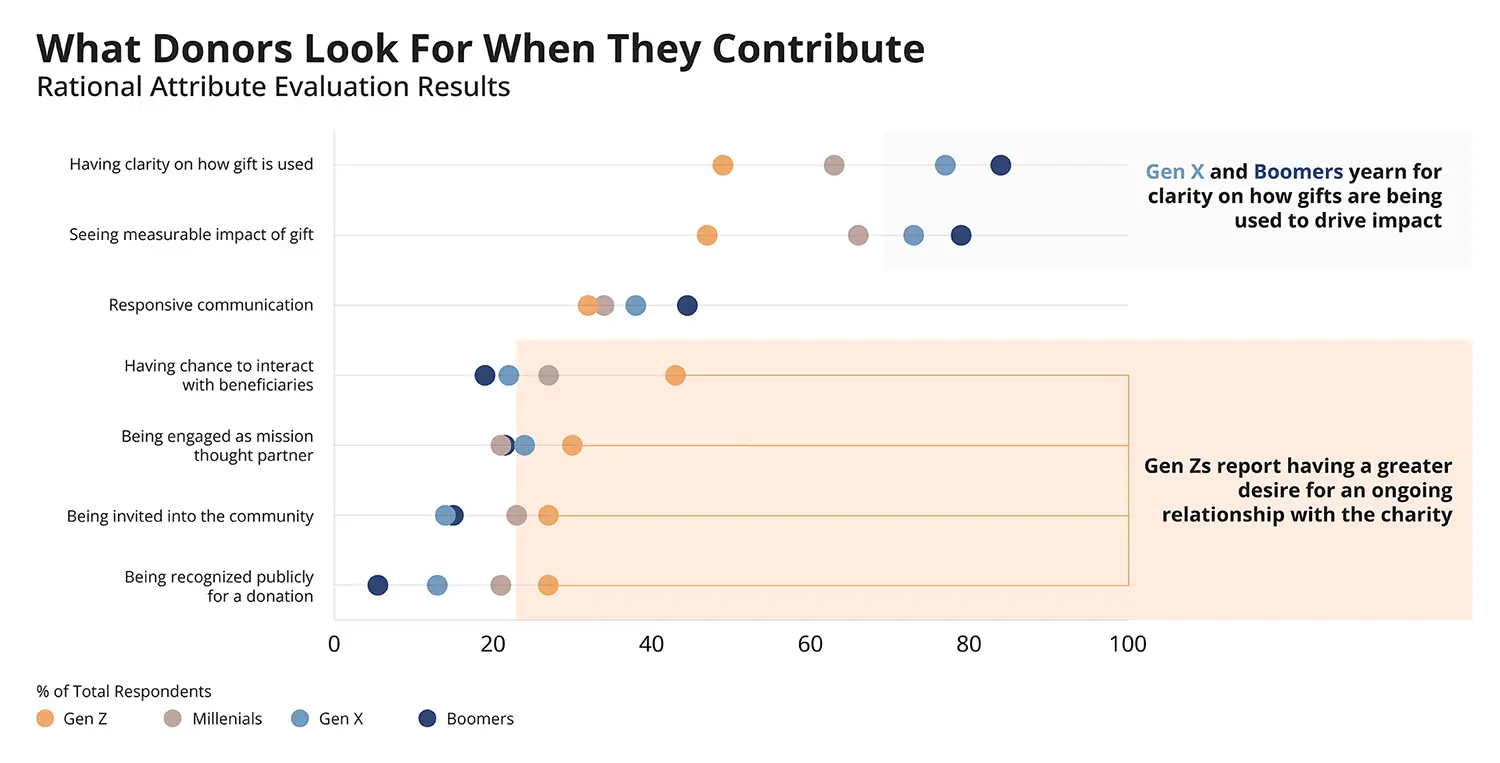
One main distinction that is made clear through our analysis is how older generations have a narrower set of benefits that they are looking for. Within the above data there were some noticeable characteristics highlighted between each generation – older donors want transparency and measurable impact. Younger donors, on the other hand, are less decisive as they begin to explore what matters most to them, with higher scores than Gen X and Boomers across most rational benefits. It is also apparent how responsive communication matters to everyone relatively equally – but what each donor wants to have communicated and what will be relevant to them differs.
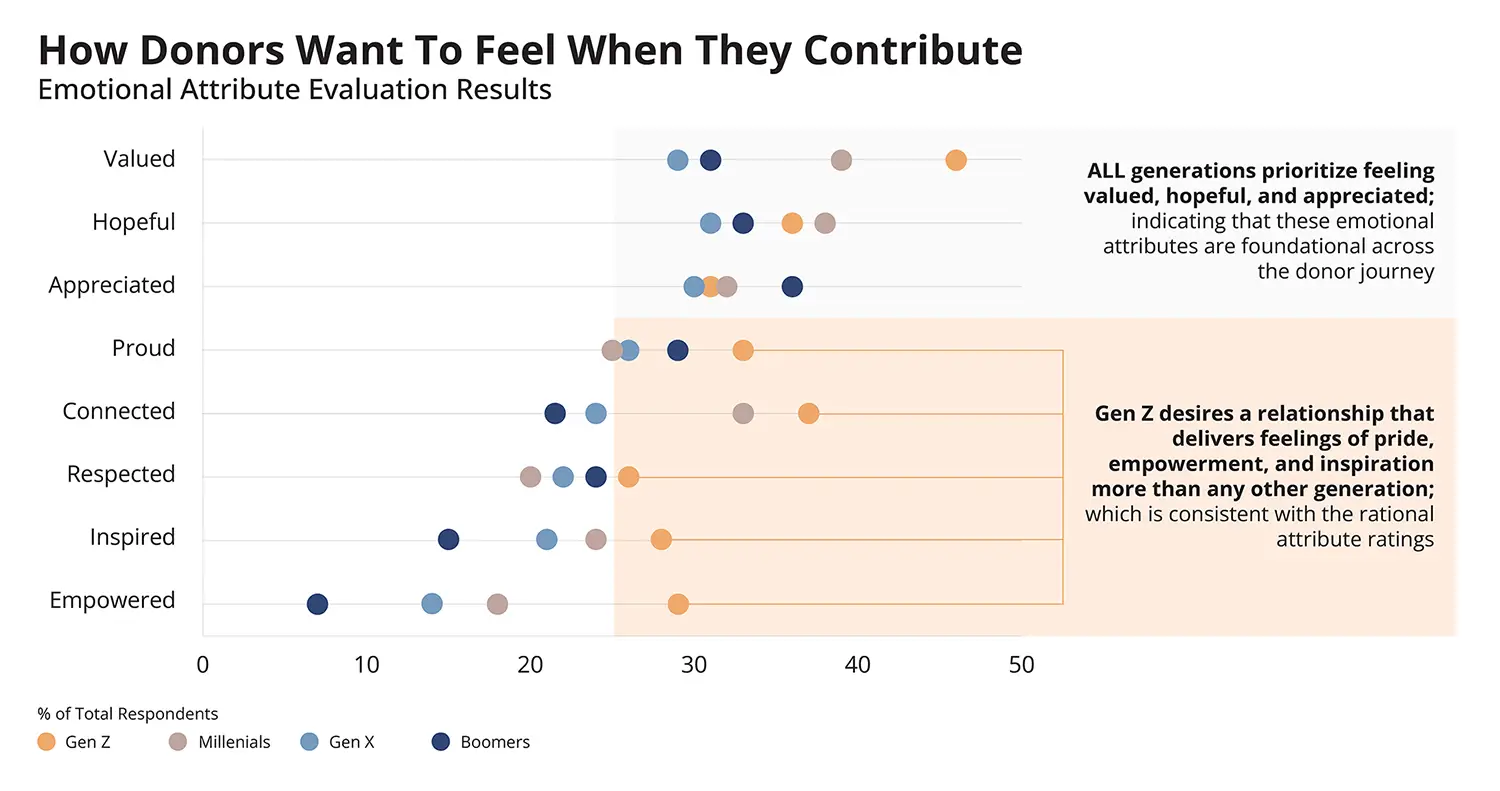
Emotional drivers experience less variance compared to rational ones, signifying that different rational benefits will yield similar emotional outcomes. There are many more emotions that have relatively similar importance indicating the complexity and nuance of donors’ desires. This data reinforces how Gen Z seeks relationships, placing high importance on empowerment and inspiration, which aligns with their rational needs.
The Bottom Line
To strengthen donor relationships, organizations should personalize engagement by understanding and acting on the unique needs of each generation of donors. Building trust through clear, transparent communication about how donations are used and the impact they create is essential. It’s also important to balance communication by tailoring both frequency and content to donor preferences, particularly for Boomers and Millennials. Beyond meeting rational expectations, non-profits must deliver emotional fulfillment, as satisfying what donors want is the key to unlocking how they want to feel. Taken together, these strategies help create deeper, more lasting donor connections.
Interested in how your organization compares to others in its understanding and application of donor motivations along the donor journey? Take this 3-minute diagnostic to receive tailored insights into your organization’s donor experience capabilities.


SEND US A MESSAGE

© 2023 Level5 Strategy.
All Rights Reserved.
SIGN UP TO RECEIVE UPDATES